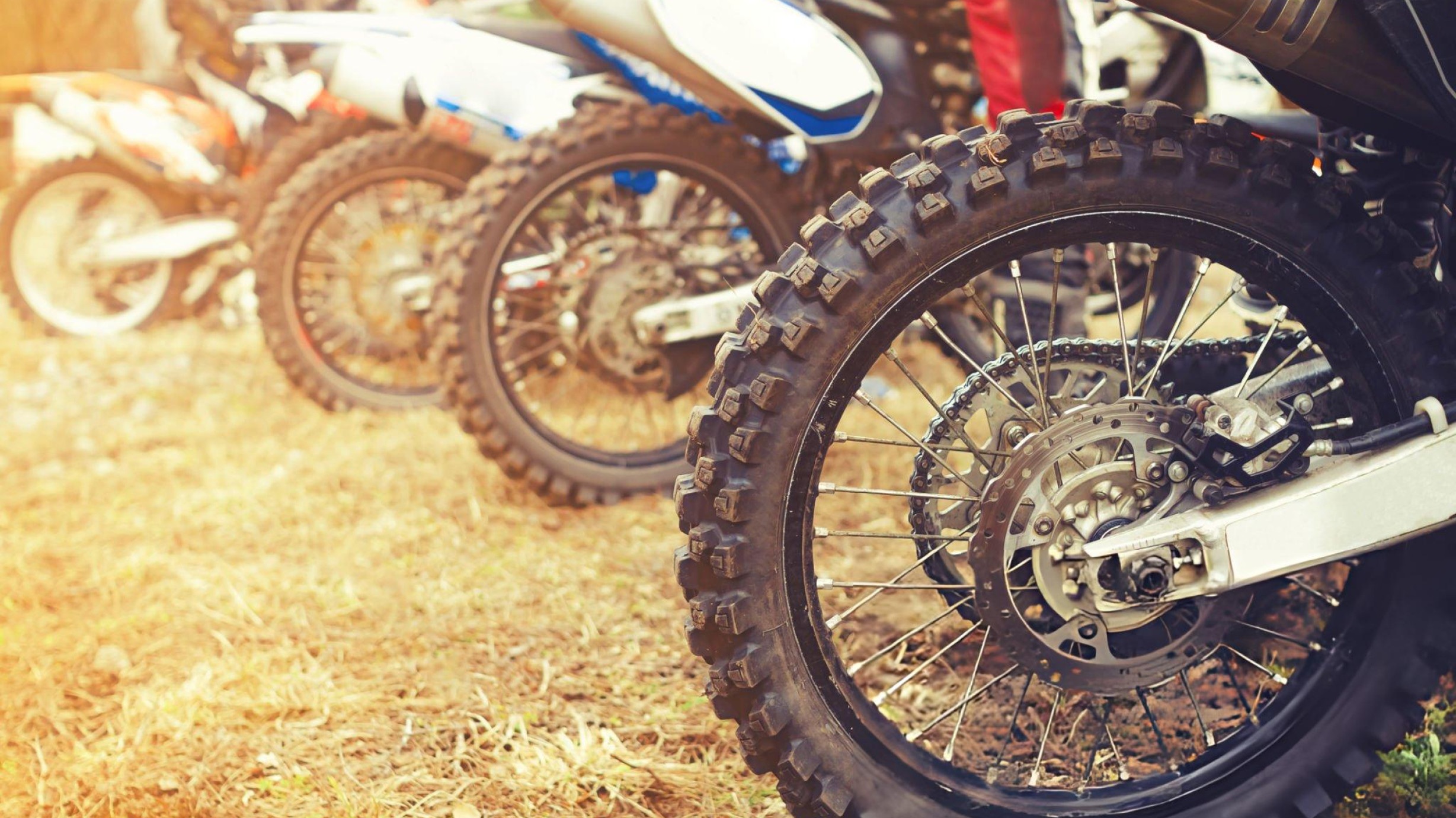
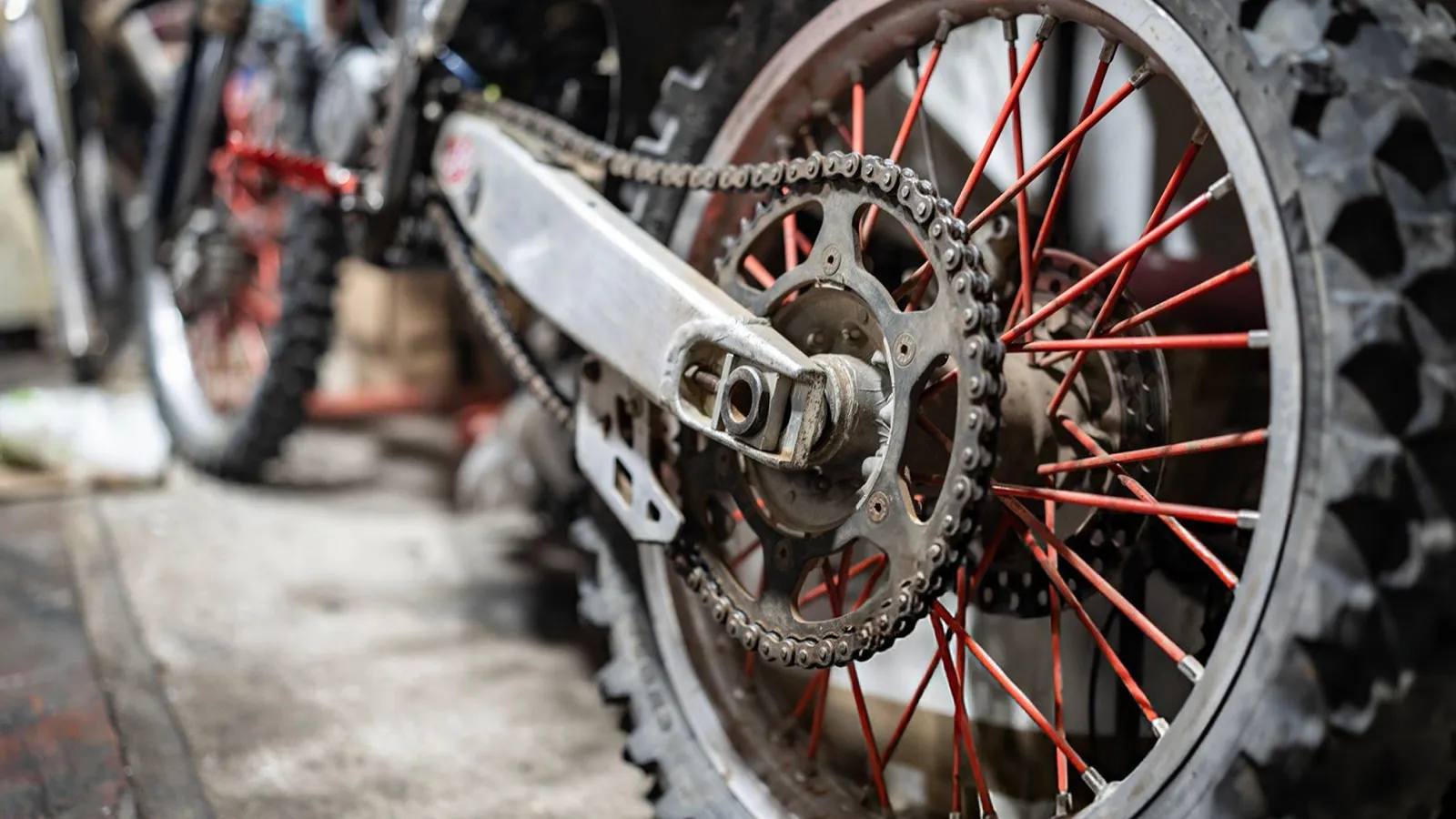
For power and speed, dirt bike gears are like a toolbox. They help you control the force on different terrains. However, depending on bike size, type, and purpose, the number of gears can vary a bit.
Don’t worry if you’re new to dirt bikes because this guide will explain everything about gears. Read on to find out more about dirt bikes’ features and gear count!
Gears are a component of the transmission system in a dirt bike. Controlling the amount of power transferred from the engine to the rear wheel is their responsibility. You can ride more effectively over a variety of terrain thanks to this.
Low gears give you more torque (pulling power) when you’re moving at slower speeds, handy for ascending or technical trails. High gears lower torque but increase speed, making them more appropriate for flat or open ground.
Imagine riding up a steep hill in high gear. The engine struggles because it doesn’t have enough torque. But drop it into a lower gear, and suddenly you’ll feel the bike pull with much more ease. That’s how gears help manage your ride.
If you’ve ever seen a dirt bike gears diagram, you might understand that the gears are sequentially arranged. Bottom is first gear, between second and first is neutral, and you go up on the gears. Each one has a ratio, and that’s why you will also hear people speak of things like dirt bike gear ratio charts or a dirt bike gear ratio calculator.
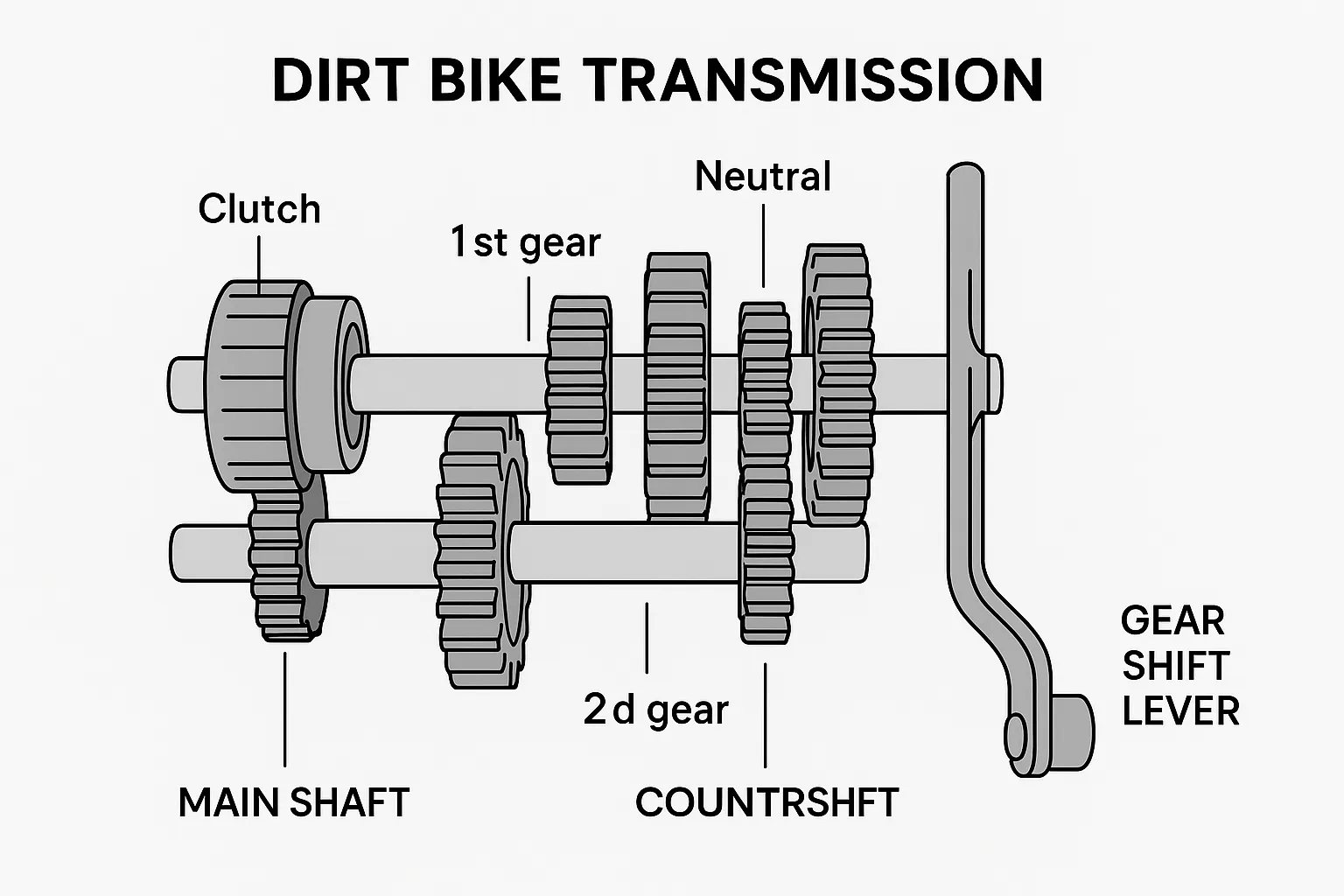
If you’re new to dirt bikes altogether, it will be hard to learn about shifting gears at first. But once you’re familiar with the concept of it, it’s second nature. Here’s how it works:
The clutch lever is on the left handlebar, and the gear shift on the dirt bike is a small lever near your left foot. To upshift, pull in the clutch, roll the gear shifter up with your foot, and then slowly release the clutch while gently rolling on the throttle. To downshift, reverse.
One of the most frequent errors that new riders are prone to is releasing the clutch too quickly, causing the engine to stall. Another is not shifting as forcefully as you can, which may leave you in what’s called a “false neutral.” That is, the gear won’t engage properly, and the bike will jerk or lose power.
Practice on flat, open ground and go slowly. As your timing between the clutch and throttle improves, you’ll start shifting smoothly without much thought. Want to learn more? Here’s a detailed Dirt Bike Sprocket & Gearing Guide!
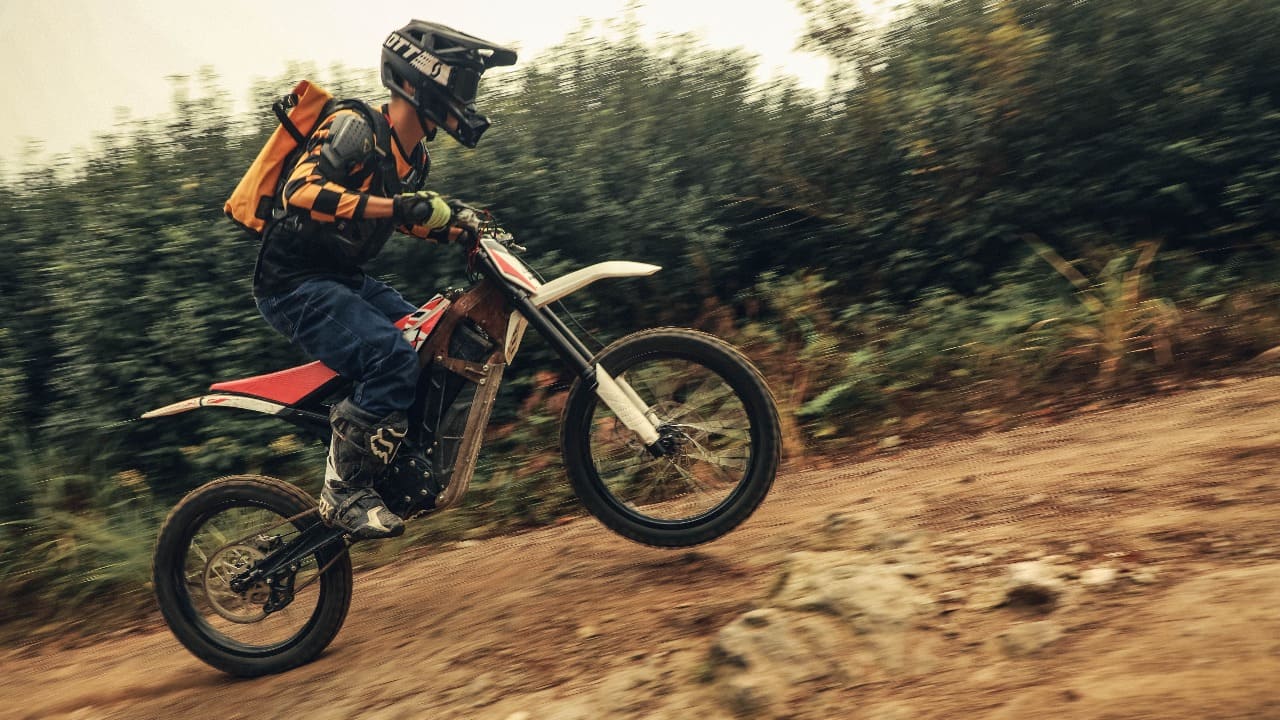
Now, let’s go ahead and answer the question itself: how many gears are there in dirt bikes?
Most dirt bikes have anywhere from 4 to 6 gears. It truly does have to do with the engine size of the bike and what type of use it is for. Like, trail bikes for regular riding would have fewer gears than racing bikes that are high-performance.
The most common setups are 5-speed or 6-speed transmissions. A 5-speed transmission is an appropriate compromise between low-end torque and top speed.
A 6-speed setup has more closely spaced gears, which helps when you require accuracy and smooth pick-up, like in motocross or enduro racing.
The number of gears a dirt bike features is directly correlated to the size of its engine and its application. Here’s a brief rundown:
These small motorbikes come with 3 to 5 gears. They are typically semi-automatic or for beginners. This might mean that the rider will not have to use a clutch at all. These motorcycles are perfect for new riders who are getting used to shifting through gears.
Dirt bikes in this size typically carry a 5-speed transmission. They are designed for multipurpose riding, with a mix of trail, street, and sometimes track use. They are suitable for intermediate riders or for those looking for a solid all-around performer.
Larger dirt bikes typically come with a 5-speed or 6-speed transmission. They are heavy-duty motorcycles for advanced riders who need torque and speed. They are ideal for enduro, racing, or motocross.
Most electric dirt bikes are not geared. Instead, they use a single-speed transmission because electric motors produce instant torque. They become incredibly smooth and easy to handle, especially for beginners.
A 4-speed bike keeps things simple. However, you might feel limited in varied terrain. A 5-speed setup is ideal for many riders. It offers a good mix of control and performance.
A 6-speed transmission provides more options. This means you can tackle steep trails in low gear and speed along open paths in high gear.
In general, more gears allow for better adjustments. But unless you’re racing or riding intensely, a 5-speed bike is usually sufficient.
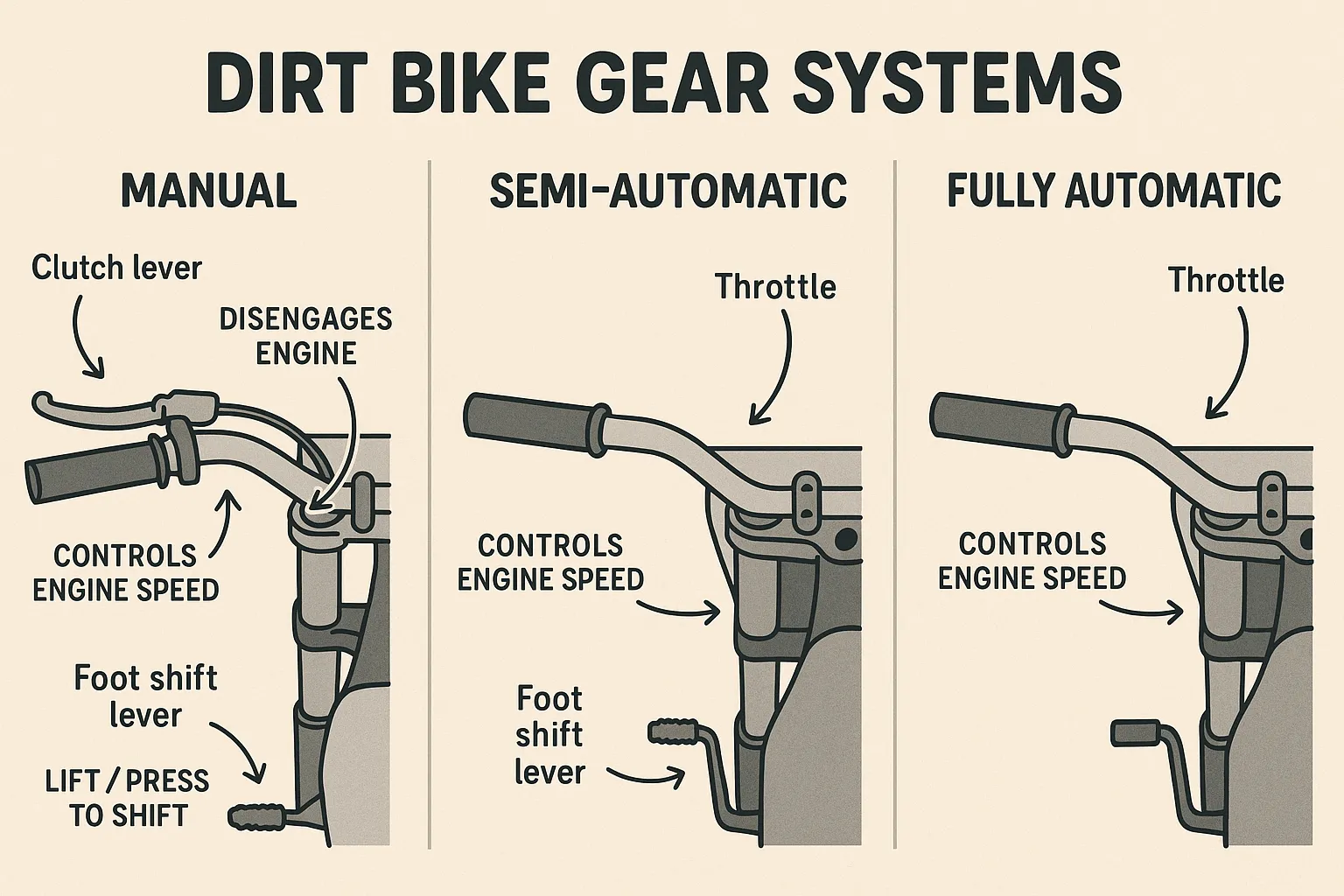
While passing through a geared dirt bike, you can identify both manual and automatic systems.
Manual dirt bikes require the rider to change gears and operate the clutch. It allows you to have more control of the bike, which is very useful when riding in challenging areas.
Semi-automatic dirt bikes take away the clutch but require foot shifting. These are found in most youth and beginner bikes.
Fully automatic dirt bikes (and, yes, they do exist!) don’t require shifting at all. You just twist the throttle and go. These are common on electric dirt bikes and small gas-powered trail bikes.
So, if you’ve been asking “are all dirt bikes manual?” or “are dirt bikes automatic?” — the answer is no, they come in all types.
If you don’t have an idea of the number of gears on your dirt bike, follow the steps below:
Knowing how many gears gives you an idea of how your motorcycle is going to ride and what kind of riding is best suited to it.
Not always. More dirt bike gears can offer more flexibility, but they don’t always make a dirt bike better. The best gear setup depends on the rider’s skill level, the terrain, and the type of riding you do.
For example, beginners may find a 4-speed or semi-auto bike easier to handle. Experienced riders might prefer the extra options of a 6-speed transmission. If you do a lot of trail riding, you might benefit from lower gears to help you crawl over rough terrain.
For racing, having more dirt bike gears leads to smoother power delivery and faster acceleration. Choosing the right bike is about matching the transmission to your needs, not just picking the one with the most gears.
In the early days of dirt biking, most bikes had only 3 or 4 gears. These bikes were simple and rugged, built more for durability than performance. As the sport grew, manufacturers started adding more dirt bike gears to improve handling and efficiency.
By the 90s and early 2000s, 5-speed gearboxes became the norm. Soon, 6-speed setups began to appear in high-end models. This gave riders even more control over speed and terrain.
Today, electric dirt bikes are pushing limits in a different way. Many have no dirt bike gears at all, but provide powerful acceleration due to modern electric motors.
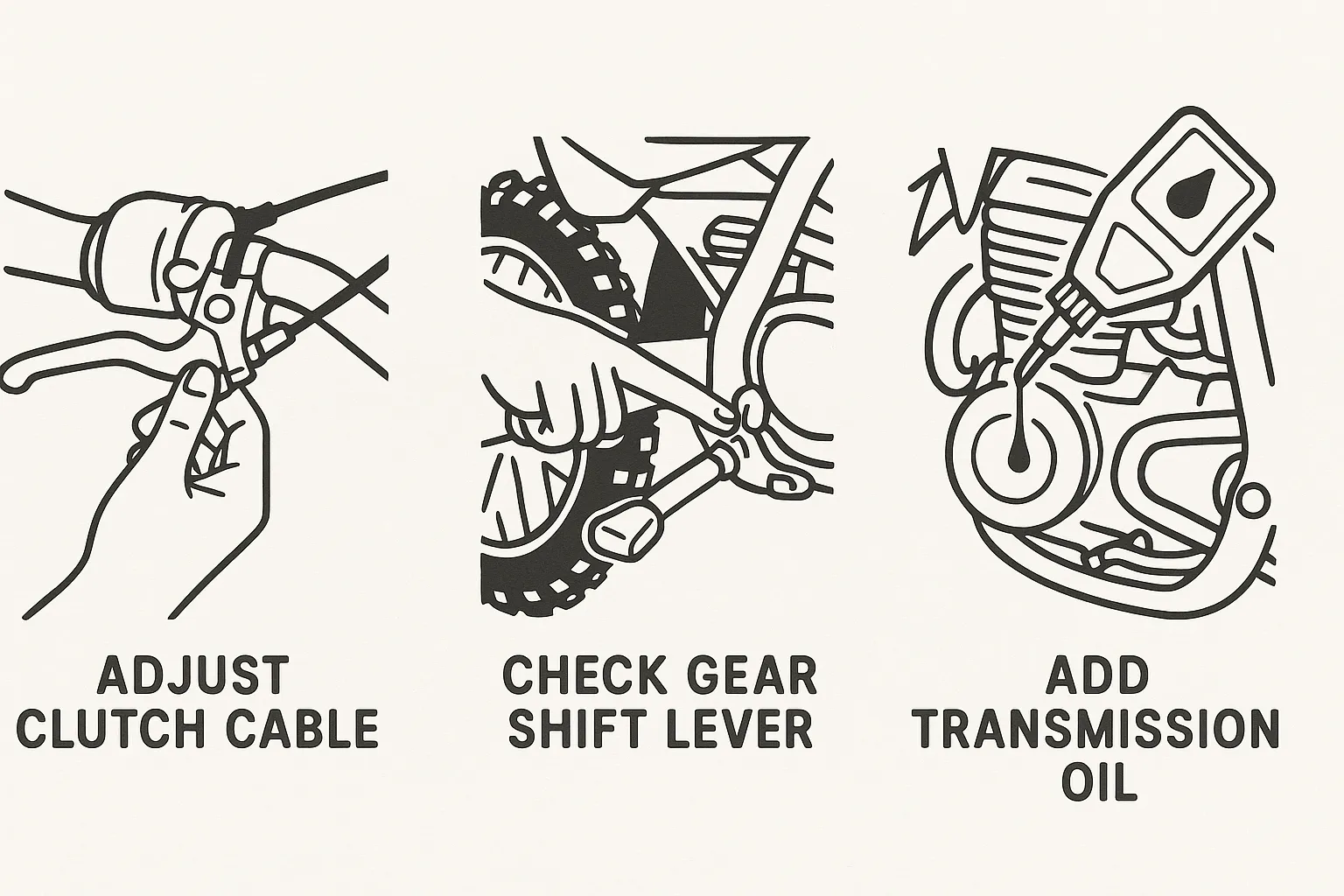
Like any mechanical device, gearboxes can go wrong if not properly serviced. Some issues are hard shifting, slipping gears, false neutrals, and worn-out clutches.
To avoid these problems:
Keep in mind that a well-conditioned gear system not only rides better but also lengthens the lifespan of your dirt bike.
In short, all dirt bikes have 4 to 6 gears. The number depends on the size and model of the bike. Whether you’re a beginner dirt biker or an experienced biker, it’s crucial to know how gears in a dirt bike work to maximize the thrill of your ride. You now know a little more about gearing in dirt bikes. Ride on, shift smoothly, and enjoy a great trail experience!
Do additional gears propel a dirt bike faster?
Not really. Additional gears give you more control over the range of speed, but engine power and bike setup also come into play.
Can I change the amount of gears on my dirt bike?
Seldom no. The gearbox is part of the engine and would involve considerable mechanical changes.
Why do electric dirt bikes not have gears?
Electric motors deliver torque immediately, so most do not use gears to manage speed or ground.
How do I practice shifting smoothly?
Practice with proper throttle control and clutch coordination. Practice in an open safe area until you are comfortable.
 Get in Touch